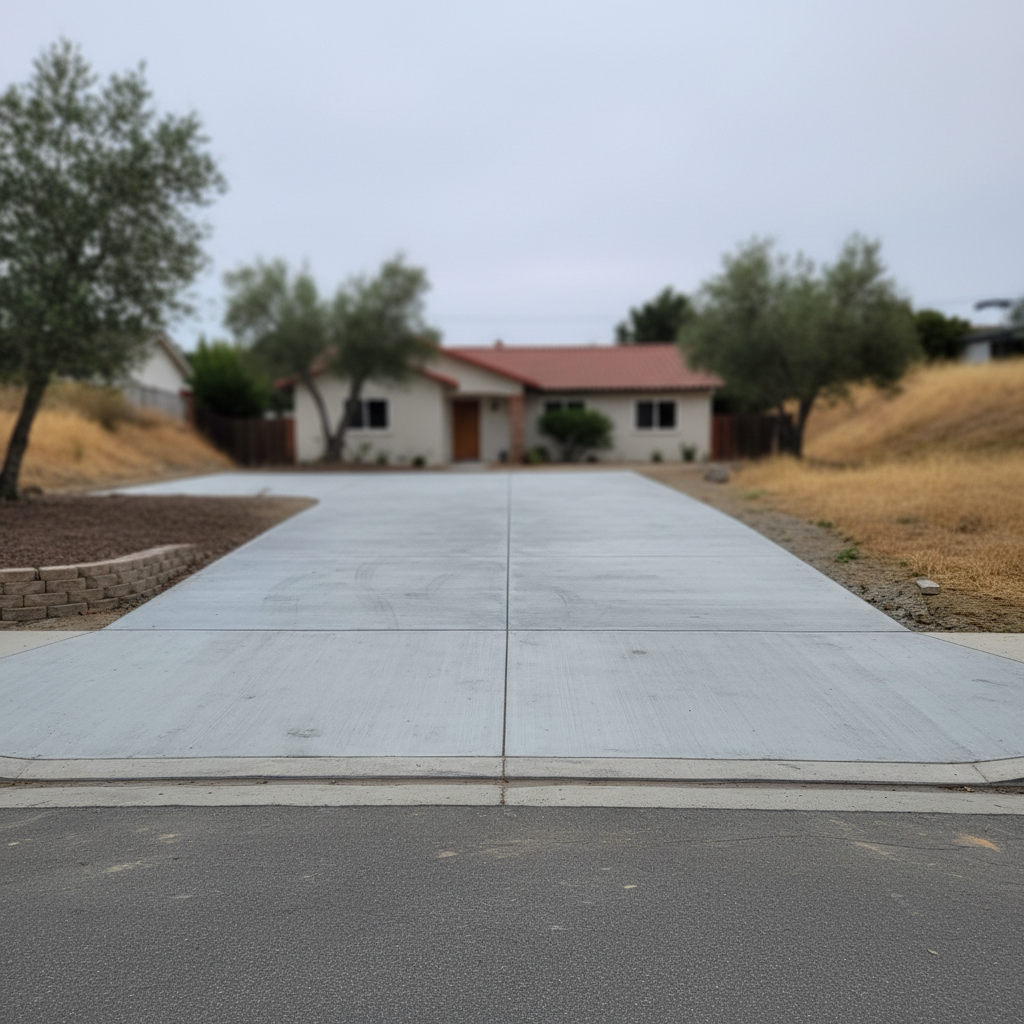
Most people shopping for a concrete contractor get three bids, pick the middle number, and hope. That works out fine sometimes. Other times the driveway cracks into four pieces by the second winter, or the patio holds standing water every time it rains, and by then the guy who poured it isn't answering his phone. Concrete is permanent in a way most home improvements aren't. You don't get a redo without jackhammering out what's there first, which is its own expense. So it's worth slowing down on who you hire.
Check the license before you look at anything else
In California, any concrete work is supposed to be done by a contractor holding a C-8 concrete classification license through the CSLB, or a general A or B license if the job is part of a bigger project. You can look up a license number on the CSLB website in about thirty seconds and see if it's active, what classification it covers, and whether there are complaints or bond issues attached to it. If a contractor hesitates to give you their license number, or gives you one that comes back under a different name, that's the whole conversation right there. Ask for proof of general liability insurance too. A broken water line or a damaged sewer lateral during excavation is not rare, and you don't want to be the one covering it.
Workers' comp matters more than people think
Flatwork is physical labor done with saws, vibrating screeds, and sometimes a concrete pump truck parked in the street. If someone gets hurt on your property and the contractor doesn't carry workers' comp, the claim can land on your homeowner's policy. Ask to see the certificate. A legitimate outfit has it ready without being asked twice.
What a real bid actually spells out
A one-line quote like "driveway, 500 sq ft, $6,000" tells you nothing. A real bid should break down thickness, base, and reinforcement, because those three things are where corners get cut and where the cost difference between bids usually comes from.
- Thickness: a standard residential driveway runs 4 inches thick, closer to 5 or 6 inches if it'll see a loaded truck or trailer regularly. A patio can get away with 4 inches. Less than that and it's prone to cracking under its own weight over time.
- Base prep: you want 4 to 6 inches of compacted aggregate base under the slab, not concrete poured straight onto native soil. Skipping the base is the single most common shortcut, and it's invisible once the concrete's down.
- Reinforcement: wire mesh was the standard for decades. Rebar, usually number 3 or number 4 bar on an 18-inch grid, holds up better long-term, especially where soil moves. Ask which one is in your bid, because mesh and rebar are not the same price and shouldn't be priced the same.
- Control joints: these are the cut lines that tell the slab where to crack instead of letting it pick its own spot. They should be cut within the first 24 hours after the pour, spaced roughly 8 to 10 feet apart for a driveway. A bid that doesn't mention jointing at all is a bid from someone who isn't thinking about it.
What Norwalk's ground and weather actually do to a slab
Most of Norwalk sits on old alluvial soil washed down over centuries from the San Gabriel Valley, with pockets of clay content that expand and contract more than the sandy soils you'd find closer to the coast. It's not the kind of severe expansive clay that causes real structural problems, but it's enough that skipping proper base compaction shows up later as settling, especially near Pioneer Boulevard and the older tracts off Firestone where homes were built on filled lots in the 1950s. A contractor who's worked in this city knows to compact the base in lifts rather than dumping it all at once and calling it done.
Weather here works in your favor more than it hurts you. There's no real freeze-thaw cycle to speak of, maybe a handful of nights near freezing in January, so you don't get the heaving and spalling that ruins concrete in colder states. The real enemy is summer heat. July and August regularly push past 90 degrees, and when concrete cures too fast in direct heat, you get plastic shrinkage cracking, those thin surface cracks that show up within hours of the pour. A contractor who knows the area will pour early morning in summer, wet-cure or use a curing compound, and may adjust the mix. If someone's scheduling your pour for 1 p.m. in August with no mention of curing method, ask why.
Rain mostly falls between November and March here, and it doesn't take much. A patio or driveway with poor grading will pond water against the house foundation in a single storm. Concrete should slope away from the house at roughly a quarter inch per foot minimum. Walk the site with your contractor before the pour and ask them to point out where the water goes.
Permits, inspections, and why that matters more than it sounds like it does
The City of Norwalk requires a building permit for most new concrete flatwork, especially driveways that tie into the public right-of-way or any structural work like a retaining wall or slab foundation. A simple patio replacement in the backyard sometimes doesn't need one, but a driveway approach, a wall over a certain height, or anything near a property line usually does. The city inspects base compaction and forming before the pour, and sometimes the finished slab after. A contractor who tells you "we never bother with permits" is either going to cut a corner you can't see later, or leave you exposed if you ever sell the house and the buyer's inspector asks for records that don't exist. HOAs aren't common in most of Norwalk's older neighborhoods, but a few of the newer developments do have design review for things like stamped patterns or wall height, so it's worth a quick check if you're in one.
Red flags that mean you walk away
A few things that should end the conversation, not make you negotiate harder:
- No written contract, or one that doesn't list thickness, base depth, and reinforcement type.
- Asking for full payment upfront. A deposit is normal. All of it before work starts is not.
- A bid dramatically lower than the other two or three, with no explanation for the gap. Concrete, rebar, and labor cost roughly the same for every legitimate contractor in the area. A huge gap usually means thinner slab, no base, or mesh instead of rebar.
- No local references or completed jobs you can actually drive by and look at.
- Vague answers about curing time. There's a real answer: foot traffic after about 24 to 48 hours, vehicles after 7 days, full strength around 28 days. If they don't know that, they haven't been doing this long.
None of this is complicated once you know what to ask. Get the license number, get the bid in writing with real numbers on it, and ask how they're handling the heat and the water. That's most of the decision made before you ever pick a company. If you're comparing bids for a driveway, patio, or foundation in Norwalk and want a straight answer on thickness, base, and timeline, that's the kind of conversation we have before a shovel touches the ground at Titan Concrete Inc.